01The Maldekian | You Once Lost an Entire Planet. In This Lifetime, You Returned to Learn How to Hold Power Safely.
If your soul carries the lineage of Maldek, your oldest memory isn't a nostalgic daydream about a beautiful, distant star.
It is a far more haunting question:
At what point does a civilization cross the threshold of no return?
You once lived on a world that no longer exists.
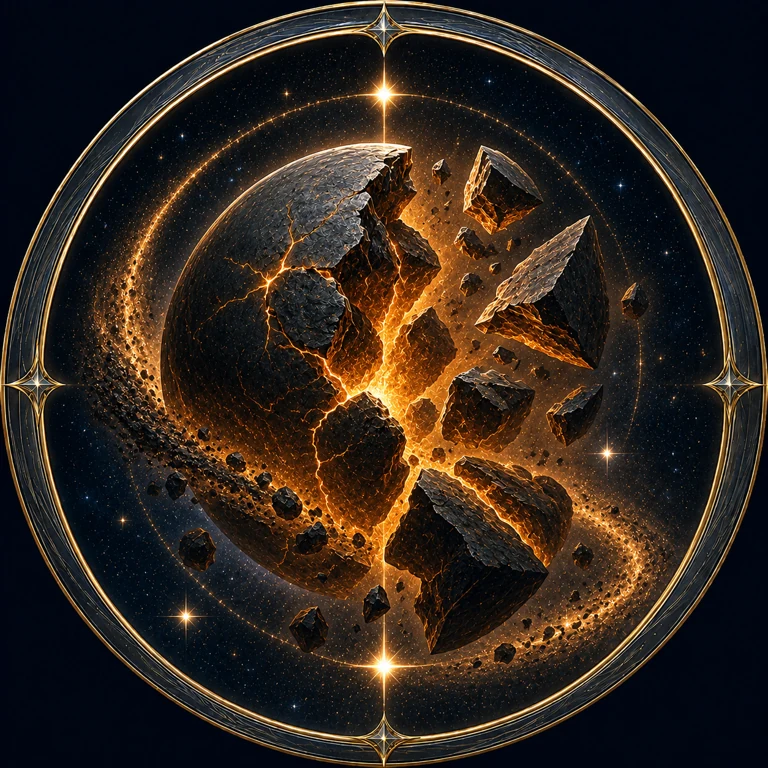
It sat in the orbital space between Mars and Jupiter—what we now call the Asteroid Belt. Today, humanity looks into that expanse and sees only barren rock, rubble, and dwarf planets. But in your soul’s memory, that emptiness was once a complete, vibrant world. It had oceans, dense ecosystems, thriving cities, fine art, temples, and groundbreaking technology. It was a civilization that genuinely believed it was ascending toward a brilliant future.
In the end, not even the ground beneath their feet survived.
This is what sets Maldek apart from almost every other starseed lineage.
Your core wound is not simply homesickness or exile.
Your civilization destroyed its own home.
And those two experiences forge entirely different kinds of souls.
02Your Oldest Memory Is of a Haven Built by Exiles
Maldek was never a monoculture.
From its very inception, it functioned as a grand sanctuary world within our solar system.
Across ancient cycles of migration, waves of souls arrived carrying the baggage of older cosmic wounds. Some came from the decline of Martian civilization; others carried memories of enslavement, invasion, and displacement from the Andromeda system. Some bore the heavy scars of Orion’s authoritarian regimes, while others were refugees from older cataclysms—souls displaced by galactic collisions, collapsed worlds, and universal disorder, seeking a new beginning. Alongside them was a younger generation of souls, stepping into high-freewill civilization for the very first time.
Because of this, Maldek was defined from day one by a single, unresolved question:
How do people who have been traumatized by power build a civilization that holds power safely?
That question became the hidden fault line beneath Maldek’s entire history.
Early Maldek was breathtaking. It was not born for war. On the contrary, it possessed an astonishingly lush ecology—ancient forests, living waters, and teeming biodiversity. Its early social architecture placed sacred value on personal freedom, the equilibrium of masculine and feminine energies, the sanctity of life, and the autonomy of distinct communities.
Most importantly: early Maldekians were in no rush to build a centralized empire.
Different settlements cultivated their own ways of living, learning to survive, cooperate, and create in loose federations. Early leaders were respected not because they could issue commands, but because they possessed mental clarity, communicated with transparency, and could navigate complex crises without stripping anyone else of their sovereignty.
This is your original archetype of leadership.
The authority you intuitively recognize has always been:
- Competent, yet non-dominating.
- Decisive, yet unmonopolized.
- Powerful, yet deeply respectful of human agency.
This is why, in this lifetime, you have an extraordinarily sensitive radar for authority.
You don’t necessarily reject leadership. What sets your alarms off is watching someone slowly, almost imperceptibly, turn "I know what's best for everyone" into "Therefore, you must obey me."
You remember where that road goes.
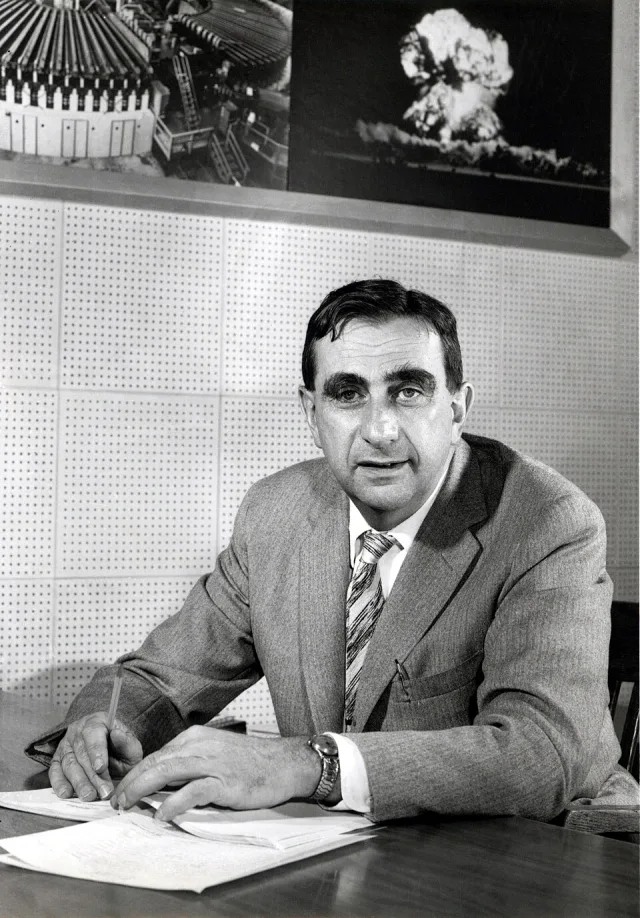
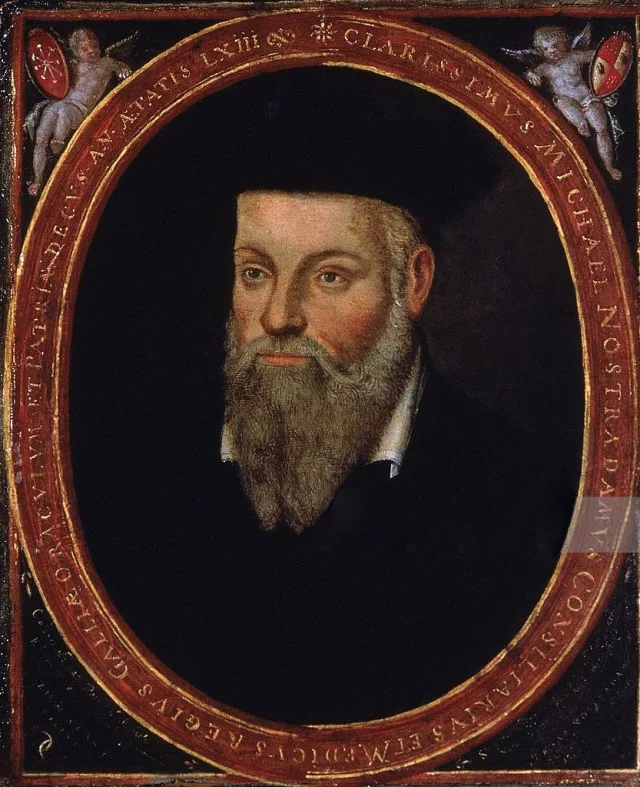
Notable Maldekians
Across epochs and horizons, these lives mirror the frequencies of this civilization on Earth.



03Your First Great Inventions Were Bridges, Not Weapons
There is a pivotal detail in Maldek’s history that often goes overlooked.
In the beginning, settlements were separated by formidable terrain, deep waters, and vast distances. Over time, people learned to build rafts, bridge wide rivers, trade across borders, and make contact with unfamiliar communities. Infrastructure emerged, languages mingled, intermarriage began, and the planet gradually wove itself into an interconnected web.
Maldek’s first great technological triumphs were not weapons of conquest.
They were tools of connection.
This points directly to a classic Maldekian gift in this lifetime.
You have a natural ability to look at two estranged, mutually uncomprehending worlds and instantly see the missing bridge between them.
- When engineering can’t understand human needs, you translate.
- When idealists and pragmatic operators despise each other, you see what each is missing.
- When different cultures, disciplines, or personalities talk past one another, you instinctively build an operating framework where everyone can finally work together.
You don’t necessarily crave the spotlight. Your real genius lies in taking systems that are fundamentally failing to cooperate and making them interface.
In your deepest memory, civilization only begins to flourish when we finally learn how to reach one another.
Following this era of connection, Maldek entered an age of extraordinary creative brilliance.
Art, music, linguistics, metallurgy, and architecture matured into refined forms. The society then turned inward, exploring the frontiers of consciousness. Sacred temples were built. People studied cosmic laws and the nature of the mind. Intimacy and sacred sexuality were honored as lifegiving forces. Ecology was revered, and inner spiritual cultivation was seen as essential to civilizational progress.
This is the true tragedy of Maldek. It was not an uncivilized, bloodthirsty species that finally managed to blow itself up.
Quite the opposite.
It was a civilization that once understood true balance.
It understood freedom. It understood collaboration. It understood spirituality, nature, and technology. It understood that power was meant to serve life.
And yet, it lost it all anyway.
That is why the Maldekian wound cuts so deep.
04The Fracture Began When Unhealed Wounds Found New Power
As Maldek stabilized, the ancient traumas that had been swept under the rug of progress began to resurface.
Souls who had once been enslaved lived in quiet dread that someone would strip away their autonomy again.
Souls who had survived invasions found it nearly impossible to fully trust neighboring settlements.
Those who had lost worlds carried an almost neurotic obsession with absolute security.
Meanwhile, younger souls grew accustomed to deferring complex choices to those who projected supreme confidence and strength.
Other factions coped by spiritually bypassing pain—clinging desperately to comfort, aesthetic harmony, and denial. When uncomfortable realities surfaced, they were met with shame, escapism, and addiction.
On the surface, the civilization appeared sophisticated and mature. But beneath the surface, ancient wounds were beginning to write public policy.
This was Maldek’s true turning point.
Because your collective evolutionary lesson was never just "learning to love and trust."
The real lesson was discernment.
- When do you extend trust, and when do you maintain healthy skepticism?
- When do you delegate power, and when must you reclaim it?
- What is genuine intuition, and what is just trauma-driven hypervigilance?
- What is authentic care, and what is control wearing the mask of care?
Maldek never solved this riddle.
Instead, the populace fractured into two dangerous extremes:
1. "I cannot trust anyone, so I must control the outcome." 2. "I don’t know how to judge what is safe, so I will let stronger people decide for me."
Whenever a civilization oscillates between these two poles, unchecked power inevitably consolidates.
05"For Everyone’s Safety": The Most Dangerous Words on Maldek
Eventually, an act of extreme violence shook the society.
For the first time, the civilization formally legitimized capital force as a protective measure. A dangerous new neural pathway was carved into the collective consciousness:
If a threat is dangerous enough, we are justified in using overwhelming force to neutralize it.
At first, it sounded completely reasonable.
Then, crime escalated. Factions formed. Weapons proliferated. Fear deepened. Law enforcement militarized.
Before long, localized friction hardened into systemic division. Society became monitored, fortified, and policed. Violence was met with superior violence, and every successful crackdown made the next escalation feel entirely justified.
This was the core psychological slide of Maldek:
You did not wake up one day and choose to become an evil civilization.
You simply told yourselves, step by small step:
"We have to do this right now to prevent something far worse from happening."
Control always found a benevolent justification.
- Surveillance was labeled "public safety."
- Censorship was framed as "protecting people who aren't ready for the truth."
- Overriding personal choice was seen as "visionary leadership."
- Expanding arsenals was called "maintaining peace."
- Curving basic freedoms was defended as "preserving civilization."
Even within spiritual institutions, keepers of esoteric knowledge began withholding sacred truths, convinced the masses would "misuse" them. Paternalistic control took root, and yet every single person involved could genuinely believe they were serving the Light.
This is why certain historical records describe Maldek’s tragedy with such chilling precision:
Maldek developed immense technological prowess and slid down the path of service-to-self, while genuinely believing it was serving the collective good.
This is far more dangerous than blatant villainy.
A person acting out of pure malice knows they are crossing a line. But when an entire civilization believes its violations are acts of righteousness, there are no brakes left to pump.
This explains a deep, idiosyncratic fear you might carry today:
You aren't just afraid of making an honest mistake.
You are terrified of something far more insidious:
What if I am utterly convinced I am doing the right thing—and I am catastrophically wrong?
06Why You Constantly Second-Guess Your Certainty
This ancient memory is why you tend to over-research before making a move.
You read the source material. Then you read it again. Then you seek out the opposing argument. Then you ask: "What are the hidden second- and third-order consequences that nobody is talking about?"
When a decision affects other people’s lives, your pace slows down dramatically.
Your soul doesn't just remember mistakes. It remembers irreversible mistakes.
The deepest memory of Maldek is not "we lost a war."
It is:
There was nowhere left to retreat.
This is why you have an instinctual obsession with contingency plans, exit strategies, risk thresholds, institutional checks and balances, and rollback mechanisms. You constantly ask: "If this step goes wrong, can we undo it?"
Others might find your thoroughness exhausting. They think you overthink.
In reality, your nervous system is mapping the failure points of the system.
- When a company introduces a convenient new policy, your first thought isn't how smooth it is; you ask, "If everyone becomes dependent on this, who checks their power five years from now?"
- When a breakthrough technology emerges, you immediately wonder, "If this scales by a factor of ten thousand, what does it break?"
- When a romance feels overwhelmingly intense, a part of you quietly checks the exits: "If I give my whole heart away, can I walk away with my sovereignty intact?"
You look at the second, third, and tenth moves down the chessboard.
It is one of your greatest gifts.
It is also why you are perpetually tired.
07The Day the Ground Literally Broke
Toward the end, Maldek’s collective emotional field grew increasingly volatile.
Fear, micro-management, shame, addiction, victim mentalities, power struggles, and a pervasive cynicism toward life itself fed into one another. Spiritual frameworks no longer had the moral weight to steady the collective ship.
Yet technology continued to advance at breakneck speed.
This is the deadliest combination in the cosmos:
Exponentially growing power paired with regressing collective consciousness.
Some memories describe Maldek’s final technology as destructive planetary weaponry; others record that your science had learned to tap directly into the planetary core, manipulating its internal energetic and geophysical engines. This was not conventional warfare aimed at leveling cities; it was technology that interfaced with the living anatomy of a planet.
The most chilling detail is that these systems were deployed under the banner of "deterrence" and "preserving the peace."
The higher the stakes grew, the more the culture convinced itself that catastrophic risk could be managed—provided the technology was kept in the hands of the "right people."
That arrogance was the final miscalculation.
War broke out. The energetic balance of the core was breached. The mantle fractured. Atmospheric integrity collapsed. The planetary grid crossed a catastrophic tipping point.
And then, Maldek shattered.
Today’s Asteroid Belt remains as the physical scar of that civilization's terminal failure.
There were no victors. There were no survivors in the conventional sense. Because the battlefield itself ceased to exist.
08The "Knot of Fear" in Your Nervous System
If the story ended with planetary death, Maldek would just be another cautionary tale of a fallen world.
What truly shaped your soul is what happened immediately after the blast.
The shockwave of a world violently disintegrating is rare in the universe.
The collective consciousness of millions did not transition smoothly into higher spiritual planes as happens in natural death. Instead, vast swaths of souls were instantly swept into an all-encompassing, tangled field of shock, guilt, terror, and confusion.
Esoteric lineages describe this as a literal knot of fear.
It wasn't an individual feeling afraid.
It was an entire planetary consciousness hopelessly entangled in a collective feedback loop of horror, self-blame, and amnesia—unable, for a long time, to remember that they were still immortal spiritual beings.
There was no outside observer watching the catastrophe. Everyone was caught inside it.
Understanding this is essential to understanding yourself.
It explains a very specific Maldekian reaction:
When a system around you starts slipping out of control, you don't just feel normal stress. Your nervous system snaps into an emergency mode: "I have to stop the cascading collapse right now."
Your inner radar begins firing frantically: Who is dropping the ball? Where is the vulnerability? What haven't we accounted for? Who holds too much unchecked authority? What information is being withheld? Where is the backup? If Component A fails, what happens to Component B? And if B goes down, then what?
While others are still casually addressing the initial hiccup, your nervous system is already bracing for the seventh-tier fallout.
Because you have lived through the ultimate worst-case scenario:
The day nobody hit the brakes in time.
09Afraid of Power—Especially Your Own
This is where Maldekians diverge sharply from starseeds whose homeworlds were purely victims of outside invasion.
Your soul remembers what it feels like to be wounded—and it remembers what it feels like to wield devastating force.
- You remember losing your freedom, and you remember participating in a society that stripped others of freedom in the name of safety.
- You remember being paralyzed by fear, and you remember building institutions designed to weaponize that fear.
- You remember being threatened by weapons, and you remember belonging to the civilization that engineered them.
Therefore, your deepest core shadow is not merely: "Will the world hurt me?"
It is:
"If I step into my full power, will I end up hurting the world?"
This creates a painful internal paradox.
- You have extraordinary strategic instincts, yet you freeze when it’s time to make the final, executive call.
- You see the writing on the wall long before anyone else, yet you incessantly poll others to validate your read.
- You are a natural leader, yet the very sensation of "ruling" or "commanding" makes you deeply uncomfortable.
- You willingly shoulder immense loads of responsibility, yet shrink when someone labels you an "authority."
- You deliberately dim your presence, acting smaller, quieter, and less assertive than you actually are—as if remaining non-threatening is the only way to avoid repeating an ancient sin.
Yet, the moment the environment descends into true chaos, you swing violently to the opposite extreme:
"Step aside. Give it to me. I'll fix it myself."
This is the classic Maldekian pendulum:
Terrified of wielding power in peace; over-functioning and micromanaging in a crisis.
10Relationships: The Burden of Discernment
In love, your struggle is rarely about simple vulnerability.
Your real battle is knowing when it is safe to surrender your vigilance.
Because within your ancient soul memory lie two catastrophic failures: Trusting the wrong people. And refusing to trust anyone at all.
This makes you a quiet, meticulous observer of behavioral consistency.
Words mean very little to you; sustained actions over time mean everything. Romantic gestures don't sweep you off your feet. What you are actually tracking is how someone behaves when they hold leverage, when they are exhausted, when they are under acute pressure, or when their interests conflict with yours.
You are constantly cataloging data: Do they respect my boundaries when I say "no"? Do they own their mistakes, or do they shift the blame? Does their personality warp when they gain an advantage? Are they quietly deciding "what's best for me" without my consent? Does their "protection" honor my autonomy, or diminish it?
To you, these aren't petty relationship check-boxes. They are survival indicators.
Because your soul knows:
True danger rarely looks overtly malevolent. Most control systems begin with the words: "I'm doing this for your own good."
Yet, there is a second Maldekian trap you must watch out for.
When you are exhausted, overwhelmed, or terrified of making a wrong call, you might suddenly abdicate your discernment altogether.
You surrender your agency to a partner. To a spiritual guru. To a rigid system of belief. To a wildly confident personality. To a tribe that claims to have all the answers.
In the short term, this abdication brings immense relief. For a moment, you don't have to carry the crushing weight of making decisions that could have consequences.
Until one day, you wake up and realize you didn't just outsource a decision—you surrendered your sovereignty.
The whiplash is often severe. You swing from total, blind devotion to scorched-earth distrust, severing ties overnight.
Your evolutionary path has never been about learning to "trust unconditionally." Nor is it about living in an impenetrable fortress of self-reliance.
It is about walking the third path:
Calibrated, verifiable trust.
- Trust that has room to grow, and room to be rescinded.
- Power that can be granted, and gracefully recalled.
- Love that does not require you to blindfold your intellect.
- Skepticism that keeps you safe without keeping your heart closed.
This is the exact balance that Maldek failed to strike.
11In Your Work: A Natural Systems and Risk Architect
You don't need a degree in engineering to possess an engineering mind.
You view the world through the lens of holistic systems architecture.
You look past the immediate drama of an event to examine the underlying structure. You look past individual bad actors to analyze the incentives that produced them.
You instinctively ask: What kind of behavior does this institutional framework reward over time? Why does this team hit the exact same crisis every six months? If this software/product scales by a hundred times, where will the subtle micro-fractures turn into structural breaks? Our current leader is ethical, but why is our governance assuming the next one will be?
These are quintessentially Maldekian questions.
Because your civilization was not brought down by a single cartoon villain. It was brought down by a self-reinforcing web of unexamined choices.
This makes you exceptionally gifted in fields like systems architecture, risk management, software engineering, safety infrastructure, AI and tech ethics, corporate governance, legal frameworks, crisis response, operational logistics, environmental science, investigative auditing, and strategic planning—any domain that asks: "How do we prevent a complex system from destroying itself through its own success?"
Your real genius isn't just fixing crises after they happen.
It is spotting the fracture while it is still cheap enough to repair.
This is why you have an instinctual love for:
- Version control and rollback capabilities.
- Stress-testing and sandboxes.
- Decentralized authorities.
- Transparent audit trails.
- Protected channels for dissent.
- Modular systems that can fail locally without taking down the entire grid.
At the deepest level, what your soul is trying to construct on Earth is the very thing Maldek never built:
A civilization designed to survive its own human mistakes.
12Hypervigilance, Unspoken Anger, and the Fear of Escalation
When this ancient gift is unintegrated, it degenerates into chronic, low-grade hypervigilance.
During an acute crisis, you are often the calmest person in the room. The hardest part for you is after the storm has passed.
When everyone else breathes a sigh of relief and says, "It’s over," your nervous system doesn't believe them. You feel an obsessive urge to double-check the perimeter, run the numbers again, establish another redundancy, and search for the hidden anomaly that everyone else missed.
The Maldekian somatic memory rarely shows up as dramatic mystical experiences. It shows up in your body as a perpetual state of tactical readiness:
- Shoulders and neck locking up the moment responsibility lands on your desk.
- A clenched jaw.
- Shallow, suspended breathing.
- Sudden, tunnel-vision focus.
- A heightened startle reflex triggered by sirens, sudden loud bangs, system outages, structural alarms, or chaotic crowds.
Perhaps the most telling symptom is this:
The calmer things get, the more suspicious you become that you've missed something catastrophic.
Because you come from a world that crossed its final, fatal threshold while most people still believed everything was entirely under control.
Healing does not mean tearing out your internal radar. That radar is a profound gift.
Maturing means learning to:
Let your radar serve as a diagnostic tool, not the dictator of your life.
13The Fear of Your Own Anger
In your soul's memory, raw, emotional force and absolute destruction sat entirely too close to one another.
As a result, you likely learned early in life to be the hyper-rational one. The mediator. The accommodating adult in the room. The one who understands everyone's perspective. The person who never causes a scene.
You can tolerate an immense amount of bad behavior. You analyze it, contextualize it, and find psychological excuses for the other person for months—sometimes years.
Until a non-negotiable boundary is crossed.
And then, you cut them off with absolute, chilling finality. No bridge left unburned. No negotiation. No second chances.
Beneath this pattern lies a deep, unspoken fear:
If I allow conflict to start, will it escalate until everything is destroyed?
So you avoid small, messy confrontations.
Yet what healthy relationships—and healthy civilizations—actually need are precisely those small, contained confrontations.
- Saying "no" earlier.
- Voicing dissent when the issue is still minor.
- Allowing someone else to feel uncomfortable.
- Patching the leak before the dam bursts.
One of the greatest lessons Maldek offers your soul is this:
Small, manageable friction is the very safety valve that prevents catastrophic explosions.
Clean, conscious anger does not destroy the world. It is the unacknowledged, suppressed, and institutionalized fear that destroys worlds.
14Earth: The Second Chance, Not a Vacation
When the Maldekian soul field was slowly unraveled from that great knot of fear, a prolonged period of healing and life-review followed.
Then, a monumental choice was made.
Vast numbers of souls did not simply treat the destruction as a tragic accident, dust themselves off, and depart for easy, higher-dimensional paradises.
You chose the heavy, sacred path of karmic restitution.
Groups of Maldekian souls entered Earth’s evolutionary cycle, initially through highly constrained, grounding incarnations—a self-selected balancing of planetary karma. Over long cycles, many integrated into the human third-density experience, becoming an enduring part of Earth's reincarnation stream. Some esoteric texts estimate the number of Maldekian soul lineages incarnated on Earth today to be in the hundreds of millions, if not billions.
This gives the Maldekian Starseed a very distinct energetic posture.
You are not an ethereal tourist descending from a distant, flawless dimension to sprinkle light on humanity.
You are an ancient resident of this solar system—a survivor of a civilizational catastrophe, an exile, and a builder.
Earth is not a temporary outpost for you.
It is your second chance.
Certain teachings explicitly describe Earth as the sanctuary world that offered Maldek’s fractured consciousness a place to continue its interrupted evolution.
This is why your relationship with this planet often feels far heavier than a breezy "I’m here to raise the vibes."
Deep in your bones lives an unwritten oath:
Not this time. We will not lose another world.
15The Civilizational Trigger: "Is Anyone Looking at the Whole?"
This is why civilizational dilemmas hit you with such visceral intensity:
- Nuclear proliferation and hair-trigger defense systems.
- Runaway, unchecked technological development.
- The concentration of power in artificial intelligence.
- Ecosystems pushed beyond their natural tipping points.
- Surveillance capitalism and the digital police state.
- Tech monoliths scaling faster than ethical and legal governance can comprehend.
- The pervasive startup culture of "Move fast and break things; we'll figure out the fallout later."
To you, these aren't just detached news cycles. They trigger an ancient somatic alarm bell.
Your soul looks at the news and instinctively asks:
Is anyone watching the whole picture?
You ask this because you know, intimately, that every single department can be executing its job flawlessly while the ship heads straight for the iceberg:
- The military can claim it is merely maintaining deterrence.
- The scientists can claim they are merely advancing pure inquiry.
- The politicians can claim they are merely preserving order.
- The public can claim they are merely deferring to the experts.
Every individual link in the chain can believe it is entirely innocent. And the collective system can still slide toward total annihilation.
Your true superpower in this lifetime is asking the higher-order question:
When every localized part believes it is acting rationally, is the whole still safe?
16The Mission: Anchoring Power with Consciousness
Your mission on Earth was never merely to "radiate love and light."
Your assignment is far more gritty, technical, and structural.
You came to learn—and to model—how power can be held without degenerating into control.
- How technology can advance without outrunning our ethical maturity.
- How leaders can make hard, decisive choices without stripping people of their sovereignty.
- How a society can protect itself against real dangers without building an internal police state out of fear.
- How systems can leave room for human error while retaining the resilience to self-repair.
- How a person can step into immense authority without being terrified of their own shadow.
You are not here to reject science or advocate for a retreat into primitive lifestyles. Maldek’s medicine is not anti-technology.
You know that power is not the enemy.
The real test is:
Can the evolution of our consciousness keep pace with the growth of our power?
This is why integrated Maldek souls belong on the front lines of humanity's fastest-growing levers of influence.
Not to obstruct all progress. But to ensure that every major leap forward is built with brakes, telemetry, transparency, public accountability, dissent mechanisms, and fail-safes.
You are the one in the room who dares to ask:
"If this is wildly successful, what new vulnerabilities does that success create?"
That is civilizational wisdom.
17Healing the "If Only"
Because of the karmic weight your soul carries, your human psychology often translates ancient planetary grief into personal, chronic guilt:
- "If only I had spotted the warning signs earlier."
- "If only I had spoken up and stopped them."
- "If only I had made a different choice, this wouldn't have fallen apart."
- "I should have known better."
- "I should have anticipated this."
- "I cannot afford to let this fail."
You hold your present-day self to impossible standards, demanding that you possess hindsight before an event takes place.
Your deepest soul memory is one massive, collective "If only."
If only someone had hit the brakes sooner. If only someone had had the courage to whistleblow. If only we hadn't called control 'protection.' If only we had turned around while there was still ground beneath our feet.
Part of your spiritual maturation in this life is redefining what responsibility actually means.
Mature responsibility is not: "I must personally guarantee that nothing bad ever happens."
Mature responsibility is: "When I hold power, I build radically honest feedback loops. When I make a mistake, I admit it early. When conditions change, I pivot without ego. And when I do not know, I never pretend to be omniscient."
This is the exact humility that Maldek lost—and the very wisdom you returned to embody.
18What Density Does Your Soul Belong To?
Maldek’s defining crucible played out in the Third Density—the foundational arena of freewill choice, moral polarity, and physical consequences.
Labeling Maldek as simply a "5D Starseed lineage" misses the entire point of your mission.
The stamp on your soul is profound precisely because you have lived through the heaviest, messiest trials of physical incarnation:
Power. Freewill. Resource allocation. Technological escalation. Sexuality and vitality. Institutional fear. Totalitarian drift. Moral courage versus self-preservation. And the eternal question: Just because we have the capacity to do this, does it mean we should?
Following the planetary cataclysm, portions of the Maldekian soul group recycled through remedial third-density cycles, while others—having processed the trauma through deep healing—graduated into fourth- and fifth-density awareness, establishing links with the higher-dimensional councils associated with Jupiter.
So if you find yourself asking: "Am I a 3D, 4D, or 5D soul?"
The Maldekian answer is simple:
Your spiritual worth is not measured by a dimensional label. It lies in the fact that you know firsthand what third-density power can destroy—and you are actively learning how to ground higher-dimensional ethics directly into physical reality where actions have real consequences.
You didn’t come to escape the physical realm. You came to help get it right.
19Your Galactic Blueprint in a Single Sentence
Ensure power always leaves a way back.
That is Maldek.
- You know how to build bridges, because you know the pain of isolation.
- You cherish personal freedom, because you remember what it feels like to lose it.
- You study the anatomy of fear, because you know unhealed trauma inevitably codifies into oppressive systems.
- You question benevolent control, because you know good intentions do not guarantee safe outcomes.
- You respect advanced technology, because you know raw intelligence is not wisdom.
- You honor irreversibility, because you watched an entire world vanish.
- You take care of the collective emotional climate, because you know fear itself can become a weapon of mass destruction.
And despite it all, you chose to incarnate here.
Not because the universe is punishing you.
Because this time, you intend to help finish the civilizational equation that was left broken.
20The Awakening of a Maldekian
Your awakening rarely begins with a romantic gaze at a starry night sky.
A Maldekian soul usually wakes up when they collide face-to-face with a civilizational tipping point:
- It might be the moment you truly grasp the realities of nuclear deterrence.
- It might be when you begin studying artificial intelligence, and realize with a shock that technical velocity has completely outstripped human wisdom.
- It might be watching an institution you care about quietly centralize power under the banner of "protecting the community."
- It might be suffering a devastating betrayal by a charismatic mentor, partner, or leader you trusted blindly—experiencing firsthand the catastrophic price of outsourced discernment.
- Or it happens in reverse: you suddenly find yourself thrust into a position of major authority, and what terrifies you isn't the workload, but the realization: "My words now directly alter the trajectory of other people's lives."
For others, the awakening is triggered by visceral, somatic symbols:
- The empty space between Mars and Jupiter; the Asteroid Belt.
- Vivid dreams of shattered worlds, planetary rings, or looking down at a cracked globe from orbit.
- Dreams of vast underground bunkers, civil defense alarms, and sudden, blinding atmospheric detonations.
- An obsession with bridges, modular ships, and crossing turbulent rivers.
- Or a recurring, haunting dream feeling: It is already too late to stop this, yet everyone around me is still arguing over who is right.
True awakening doesn't require knowing the word "Maldek."
It happens on the day you look at your life’s eccentricities and realize:
Every seemingly disconnected quirk of my personality has been answering the exact same question:
Why am I fiercely protective of freedom, yet obsessed with keeping systems orderly? Why do I loathe overbearing authority, yet always step in to take the wheel when a crisis breaks out? Why am I captivated by high technology, yet deeply anxious about where it leads? Why am I brilliant at navigating emergencies, yet entirely incapable of relaxing into genuine peace? Why do I yearn to help people, yet worry that my help might rob them of their independence? Why am I always the bridge-builder between warring factions? Why am I constantly planning for the worst-case scenario? Why am I so terrified of stepping into my own magnitude?
These are not random, disjointed neuroses.
They are the living memory of a civilization trying to heal itself through you.
21The Mature Maldekian: What You Look Like Integrated
When a Maldekian soul steps out of trauma and into mature embodiment, an extraordinary transformation takes place:
- You no longer abandon your leadership out of a fear of becoming a tyrant.
- You no longer micromanage the lives of others out of a fear of chaos.
- You learn how to hold immense power without violating sovereignty.
- You learn how to lead without monopolizing the conversation.
- You learn how to stay vigilant without living in chronic panic.
- You learn how to extend trust without surrendering your discernment.
- You learn how to channel clean anger without burning the world down.
- You learn that making a mistake is not the end of the world.
- You learn that real safety does not require trading away every scrap of human liberty.
- You learn to champion bold technology while fiercely protecting ethical, human, and ecological boundaries.
Above all, you learn something that is exquisitely difficult for a Maldekian soul to accept:
True safety does not require you to anticipate every single problem in advance.
A healthy civilization does not rely on an infallible, all-knowing savior who never makes a mistake.
It relies on resilient, honest, and forgiving structures that can absorb human error and still find their way home.
And a healthy, integrated you operates the exact same way.
22Your Soul's Ultimate Blueprint: Building a Restorable World
If there is a final cosmic mark left by the Maldekian lineage, it is not "destruction."
Destruction was merely the most violent chapter in the middle of your story.
Your true signature is:
Restoration.
Your soul knows, intimately and down to the bone, how a civilization slowly paints itself into a corner until there is no ground left to stand on.
Therefore, in this lifetime, you came to construct its exact opposite:
- Relationships that hold space for repair.
- Decisions that have rollback mechanisms.
- Leaders who welcome honest questioning.
- Institutions that have the humility to admit error.
- Safety that is built on mutual empowerment rather than weaponized fear.
- Technological progress that honors the pace of human wisdom.
- A world where the few do not hoard power under the excuse of "knowing better."
- A peace that does not depend on holding a bigger gun to someone’s head.
- A culture that notices the crack in the foundation long before it becomes a chasm.
Your deepest galactic blueprint is to take that ancient, irreversible planetary catastrophe and transform it into the living, structural wisdom of civilizational resilience.
When you finally stop asking: "How do I ensure that I never, ever make a mistake?"
And begin asking: "How do I help build a world where, even when we stumble, there is always a way back?"
You have stepped out of the shadow of Maldek, and into the full, magnificent maturity of your power.
You have already seen what happens when power loses its soul.
This time, you did not come to play small, hide in the shadows, or pretend you are weak.
You came to prove something far more important:
Power can be vast, without losing its capacity for love. Civilization can be extraordinarily advanced, without trading away its freedom. And humanity can stumble, learn, and evolve—without ever having to pay for its mistakes with the life of an entire world.